Headlines about falling sales figures and overheated prices are making buyers and sellers nervous — but the picture on the ground in Garrucha, Vera, Mojácar and San Juan de los Terreros looks rather different. At ZAR 2010 we have been selling property on Almería’s Levante coast for thirty years, and what we see in our day-to-day work does not always match the national statistics. This article gives you an honest reading of where the market stands right now and what you can realistically expect over the coming months — whether you are buying or selling in this corner of south-east Spain.
What the national data says — and why it does not tell the whole story
A recent report published by Spanish financial daily Expansión points to a drop in the number of second-hand property transactions completed across Spain. That kind of headline understandably worries people who are thinking about buying or selling. But statistics need context, and in our experience the context here is crucial.
At ZAR 2010 we have not seen a slowdown in the number of deals we are closing. The pace of sales in our area remains solid. So what are the national figures actually measuring?
Fewer homes for sale means fewer sales recorded
The logic is straightforward. If the number of properties available on the market drops, the number of transactions will fall with it — not because demand has dried up, but simply because there is less to buy. The shortage of second-hand stock is the primary driver of the statistical decline in completions at national level. It is a supply problem, not a demand problem.
On the Levante coast, demand remains firm. Buyers from the UK and Ireland — who make up roughly half of our client base — continue to look for homes in Garrucha, Vera, Mojácar and San Juan de los Terreros, whether as a permanent move or as a holiday base with the option of renting out. That interest has not weakened.
Do you own a home in the area?
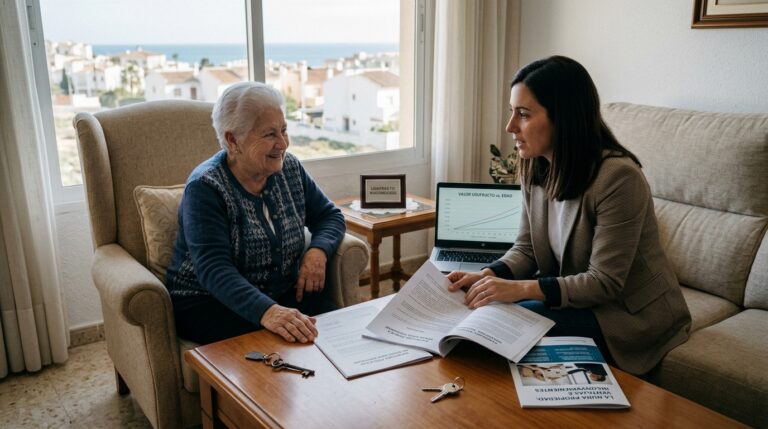
It is probably the best moment in almost 20 years to sell. We tell you what it is worth today, free.
Value my home →Will prices keep rising?
This is the question we hear most often, and it deserves a straight answer: it depends entirely on whether the asking price of a given property reflects what the market can actually support.
Prices have risen significantly across Spain in recent years, and the past twelve months have seen particularly sharp increases in some areas. That environment has produced a split in the market that is becoming increasingly visible here on the Levante coast.
Correctly priced homes are still selling well
Properties listed at prices that genuine buyers can afford — and that Spanish banks are willing to lend against — are continuing to sell at a healthy pace and within a reasonable timeframe. The buyers are there. The mortgage finance is available for those transactions. And deals are getting done.
In almost every case, these are homes whose owners listened to professional advice when setting their asking price. They factored in the condition of the property, its location, what comparable homes were actually selling for, and what a realistic buyer could pay. That approach works.
Overpriced homes are sitting unsold
At the other end of the scale, we are seeing a growing number of properties that attract very little interest — few enquiries, almost no viewings, and minimal traction in the market. The common thread is almost always the same: an asking price that has drifted too far above market reality.
How does this happen? Often a seller has read about rising prices nationally and applied that trend to their own home without accounting for local conditions, the age and state of the property, or what else is available at that price point. There is also a very human factor at play: it is genuinely difficult to value your own home objectively. You have invested money, time and emotional energy in it. That is entirely understandable.
Word-of-mouth comparisons with neighbours who have recently sold also play a role. In our experience, the price people say their neighbour got and the price the neighbour actually received are rarely the same number. Sellers tend to share the optimistic version, and any negotiation discount quietly disappears from the story. The result is that some owners enter the market with expectations that no reputable agent can responsibly support.
A technical signal worth paying attention to: mortgage valuations
There is a specific indicator that tells us something important about where certain parts of the market have moved: some bank valuations (tasaciones) are now coming in below the agreed sale price.
For British and Irish buyers this is a particularly relevant point. In Spain, the mortgage a bank will offer is based on the official valuation, not the purchase price. If there is a gap between the two, the buyer must cover the difference from their own savings on top of the standard deposit. That makes some transactions simply unworkable. When valuations consistently fall short of asking prices, it is a clear signal that those prices have moved beyond what the wider financial system considers sustainable.

What should buyers and sellers actually expect in the short term?
Based on everything we are seeing on the ground, here is our honest assessment of the near-term outlook:
- Realistically priced homes will continue to sell. The underlying demand has not gone away, and buyers who can secure mortgage finance are completing purchases without significant delays.
- Overpriced homes will have to come down. Not overnight, but steadily, as weeks and months pass without viewings or offers. Eventually most sellers reach the point where a price reduction becomes the only realistic option.
- Average price statistics may show a dip in the coming months — but that dip will largely reflect the correction of properties that were never accurately priced in the first place. It will not mean that sensibly priced homes are losing value. The buyer who pays a fair price today for a well-located property in Garrucha, Vera, Mojácar or San Juan de los Terreros is not overpaying; they are buying at the right price.
The short version: the market is not going to crash, but it is becoming less forgiving of optimistic pricing. Properties priced on evidence will keep moving. Properties priced on hope will sit until someone makes a difficult decision.
What this means if you are selling in the Levante Almeriense
If you own a property in this area and you are thinking about selling, the single most useful thing you can do right now is get an accurate, evidence-based valuation — not the number you would like to hear, not what a neighbour claims to have achieved, but the price at which your property is genuinely likely to sell in the current market within a realistic timeframe.
The cost of overpricing is real and often underestimated. A home that sits on the market for many months without selling sends a signal to buyers that something is wrong, even when nothing is. When you eventually reduce the price — as most overpriced sellers do — you will often end up accepting less than you would have achieved with a well-judged starting price. Time on market is not neutral: it works against you.
A free valuation with no strings attached
At ZAR 2010 we carry out free, no-obligation property valuations. We will tell you what you need to know, not what you want to hear. With thirty years of transactions completed in Garrucha, Vera, Mojácar and San Juan de los Terreros, we have a detailed, current picture of what properties are actually selling for — not just what they are listed at.
Get your free property valuation from ZAR 2010
What this means if you are buying on the Levante coast
If you are a British or Irish buyer considering a purchase in this area, the advice is equally clear: do not hold out for a widespread price crash, because that is not what the data or our experience on the ground suggests is coming in the segment of correctly priced homes.
What you may find are genuine negotiating opportunities on properties that have been on the market for a long time and whose sellers are now more flexible than they were when they first listed. Identifying those properties — and distinguishing them from homes that are genuinely fairly priced — is where local expertise makes a real difference. No property portal will tell you which listings have been sitting unsold for six months and why.
It is also worth understanding how the Spanish mortgage system works if you are planning to finance part of your purchase. The valuation process is different from the UK, and the gap between valuation and asking price that we described earlier can have a direct impact on how much you need to have in savings. We can walk you through that process in plain English.
The bottom line
The property market on Almería’s Levante coast is active and functioning. Deals are being done. Buyers from the UK and Ireland continue to make up a significant part of the demand. Supply is tight, which keeps upward pressure on prices in the realistic segment of the market. And if a price correction comes, it will be concentrated in the overpriced tier — the properties that should have been listed lower from day one.
If you have questions about a specific property you are thinking of selling, or you want an honest view on whether a home you are considering buying is priced correctly for the local market, we are here to help. No hard sell, no vague reassurances — just straightforward advice from people who know this coast well.